


All Products
-
Industrial Steel Grating
-
Serrated Steel Grating
-
Heavy Duty Steel Grating
-
Grating Trench Cover
-
Anti Slip Grating
-
Steel Stair Treads Grating
-
Fiberglass Grating Panels
-
Stainless Steel Grating
-
Aluminum Bar Grating
-
Metal Fence Clips
-
Expanded Metal Sheet
-
Perforated Metal Plate
-
Welded Mesh Fence
-
Chain Link Fence
-
Gabion Wire Mesh
-
Stainless Steel Mesh
-
Metal Filter
-
 Andy SimpsonI'm a long-term partner of this factory. I've been on a field trip.The factory is strong and the grating quality is very good. I cooperated with this grating supplier in 2017.What surprised me was that this factory was very strong,and it was also one of the top local grating factories.
 -
David ZhangMy client told me that it was very smooth.The delivery speed is also very fast,I will receive the goods on the 7th day of the order.And the goods is inexpensive and convenient.
-
Ajay ParateI have placed an oeder at this factory about FRP grating.The service is good and the grating is perfact.I'll come again.
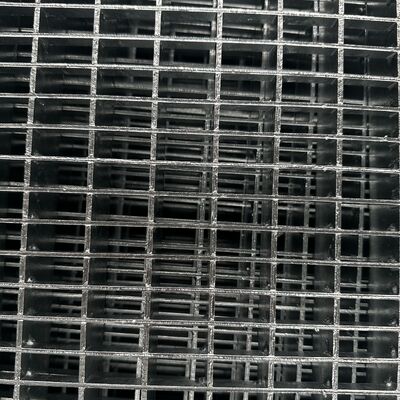
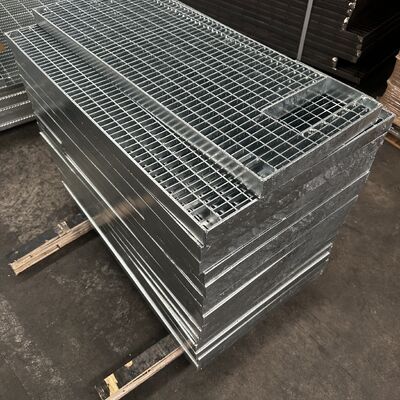
Adjustable-spacing industrial steel grating with varied bar sizes delivers superior structural versatility


| Place of Origin | China |
|---|---|
| Brand Name | ZHUOTE |
| Certification | ISO9001 |
| Model Number | Customized as required |
| Minimum Order Quantity | 10pcs |
| Price | USD 10-30/SET |
| Packaging Details | Pallets in containers or as per request |
| Delivery Time | 5-8work days |
| Payment Terms | L/C, D/A, D/P, T/T, Western Union |
| Supply Ability | 500sq.m per days |
Product Details
| Material | Carbon Steel, Stainless Steel, Alloy Steel | Keyword | Steel Floor Decking Grating |
|---|---|---|---|
| Surface Treatment | Hot Dip Galvanized | Grating Standard | Q235/S235jr |
| Product Process | Welding | Manufacturingprocess | Welded, Press Locked, Or Riveted |
| Bartype | Bearing Bars And Cross Bars | Thickness | Typically Ranges From 3mm To 10mm |
| Highlight | adjustable-spacing industrial steel grating,industrial steel grating with varied bar sizes,structural versatile steel grating |
||
Product Description
Adjustable-spacing industrial steel grating with varied bar sizes delivers superior structural versatility
As a high-performance and multi-functional structural building material, steel grating is widely adopted in modern industrial construction, municipal infrastructure and commercial civil engineering. It integrates customizable structural specifications, diversified material options, versatile surface treatment processes, comprehensive application scenarios and standardized technical parameters, delivering unique comprehensive advantages that many traditional building materials cannot match. With stable structural performance, strong environmental adaptability and excellent cost-effectiveness, steel grating has become an indispensable core component in various engineering projects.
Customizable and standardized specifications constitute the foundational advantages of steel grating. The product features flexible and adjustable structural parameters, covering both universal standard models and personalized non-standard customization to meet diverse load-bearing, installation and construction requirements. The main load-bearing bars are available in multiple mainstream specifications ranging from 20×3mm to 50×5mm, with an adjustable spacing of 20mm to 100mm. Among them, 30mm and 40mm spacing are recognized as universal industry standards for conventional engineering. Matching twisted square steel cross bars come in 6×6mm, 8×8mm and 10×10mm sizes, with spacing adjustable from 50mm to 200mm, and the 100mm spacing achieves an optimal balance between structural load capacity and economic benefits. Standard grating panels are sized 1–1.2m in width and 2–6m in length, while customized dimensions such as wide panels for large platforms and short-size panels for stair treads can be produced according to project drawings, fully adapting to complex and variable construction scenarios.
Diversified material selection enables steel grating to adapt to differentiated and complex working conditions. Three types of high-quality industrial materials are widely used, covering conventional, corrosive and load-sensitive scenarios respectively. Carbon steel of Q235 and Q355 grades is the most cost-effective option with stable mechanical strength, suitable for indoor dry and low-humidity environments such as factories and warehouses after professional anti-corrosion treatment. Stainless steel series including 304, 316 and 316L grades excel in corrosion resistance: 304 stainless steel adapts to outdoor and mild chemical environments, while 316 and 316L grades effectively resist seawater, acid and alkali corrosion, making them ideal for harsh scenarios like marine facilities, chemical plants and food processing factories. Aluminum alloy grating features ultra-light weight, only one-third of conventional steel, with inherent anti-corrosion properties, perfectly catering to load-limited projects such as aerospace supporting facilities, urban pedestrian bridges and coastal engineering.
Various surface treatment processes endow steel grating with dual advantages of protective functionality and aesthetic performance. Steel grating has no original color, and its appearance and environmental durability are determined by professional surface finishing technologies. Hot-dip galvanizing is the most mainstream industrial process, forming a uniform silver-gray zinc coating with a thickness of no less than 85μm, providing 15–20 years of stable anti-corrosion performance in outdoor environments and widely used in industrial and municipal projects. Powder coating supports personalized customization of red, blue, green, yellow, gray and other colors, with wear-resistant and UV-stable surfaces that resist aging and fading, suitable for commercial buildings and landscape municipal facilities. Spray painting offers flexible color matching for indoor low-wear scenarios with unified color coordination requirements, though its durability is relatively limited. The natural stainless steel finish retains a high-grade metallic silver texture without additional coating, which is clean, hygienic and compliant with modern architectural design and sterile operating environment standards.
Benefiting from superior structural performance and wide environmental adaptability, steel grating covers a full range of application fields including industry, municipal infrastructure, commercial and civil construction, as well as special harsh scenarios. In industrial fields, it is applied to factory operating platforms, anti-slip walkways, stair treads, equipment supports and offshore drilling platforms, where its heavy-load and anti-slip properties ensure safe operation in heavy-duty environments. For municipal infrastructure, it serves bridge deck paving, road drainage grates, sidewalk facilities, subway stations and sewage treatment plants. Its open-grid structure realizes efficient circulation of water and debris, effectively preventing blockage and reducing long-term maintenance costs. In commercial and civil buildings, it is widely used in shopping mall atriums, underground garages, pedestrian bridges, rooftop terraces and balcony flooring, balancing structural stability and modern architectural aesthetics. In addition, customized grating products can adapt to special scenarios, including anti-corrosion models for marine and chemical projects, food-grade stainless steel products for food processing industries, and serrated anti-slip grating for fire escape passages.
Standardized core technical parameters ensure the long-term safety and stability of steel grating in engineering applications. All products are manufactured in strict accordance with international industrial standards such as OSHA and EN 14411, with clear and reliable performance indicators. The load-bearing capacity is graded scientifically: 5–10kN/m² for conventional pedestrian scenarios and 15–25kN/m² for light vehicle passage, meeting different engineering load requirements. The serrated anti-slip design enables a wet surface anti-slip coefficient of no less than 0.5, effectively preventing slip accidents and guaranteeing workplace safety. In terms of corrosion resistance, different material and process combinations can resist conventional oxidation, mild chemical erosion and seawater corrosion to adapt to various harsh environments. The product weight varies by material, providing flexible options for structural load control, transportation and installation. Structurally, welded grating features a weld joint shear strength of ≥3.6kN, while mechanically locked grating adopts a modular detachable structure, supporting repeated use and effectively reducing comprehensive project costs.
In conclusion, steel grating stands out in modern engineering applications relying on its highly customizable specifications, diverse material adaptability, flexible aesthetic options, wide application coverage and standardized reliable performance. It not only meets the functional and safety requirements of various conventional and harsh engineering scenarios but also delivers outstanding long-term cost performance, making it a trusted and essential structural material for global construction and industrial engineering projects.

|Frequently Asked Questions
Q: Are you trading company or manufacturer?
A: We are manufacturer.
Q: How long is your delivery time?
A: Generally 5-10 days for in-stock items, or 15-20 days for out-of-stock items depending on quantity.
Q: Do you provide samples? Is it free or extra?
A: Yes, we offer samples but customers must cover the cost and freight.
Q: What are your payment terms?
A: For orders ≤1000USD, 100% in advance. For orders ≥1000USD, 50% T/T in advance with balance before shipment.
For additional questions, please feel free to contact us.
Recommended Products